Citi Corrects European Risk Model After $35 Billion Understatement
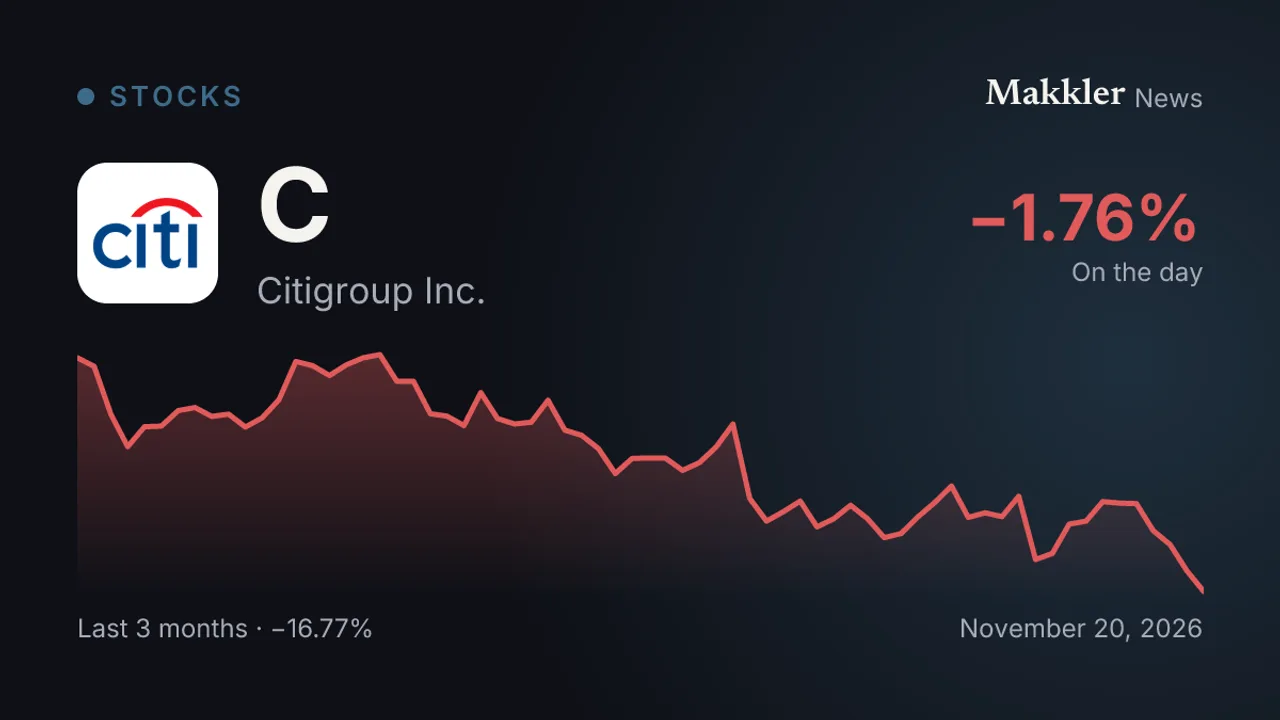
Citigroup said it fixed a European subsidiary’s capital-modeling issue and added capital after trades were recorded incorrectly.
Key takeaways
- Citigroup’s risk-weighted assets were understated by about $35 billion at a European trading unit.
- The bank said it identified and resolved the modeling issue this summer.
- Citigroup said the subsidiary met regulatory minimums throughout the period.
Citigroup understated risk-weighted assets by about $35 billion at a European trading unit after some trades were recorded incorrectly, people familiar with the matter told Reuters. The bank said it fixed the issue and injected capital into the subsidiary.
The error involved the UK securities unit’s use of an internal model based on the bank’s statistical assumptions, according to people familiar with the matter. Regulators had not approved that model for the types of transactions involved. Recalculating the trades with a standard risk model significantly increased the unit’s risk-weighted assets.
The $35 billion figure is an estimate of the calculation gap, not a direct loss. Citigroup reported total risk-weighted assets of about $1.2 trillion in June and September, making the gap about 2.7% of that amount. Reuters could not establish whether the adjustment had already been reflected in the reported figures.
Citigroup said it identified the internal capital-modeling problem this summer and completed corrective steps. The bank said the subsidiary met regulatory minimum capital requirements throughout, and that the issue did not affect its holding company or main operating bank. It did not disclose how much capital it transferred.
The error adds to the bank’s regulatory challenges. US regulators fined Citigroup $400 million in 2020 over risk-management and data-governance problems, then imposed another $136 million fine in 2024 over delays in addressing data-management issues.
This article was produced with the help of AI technology. Based on reporting by the outlets listed above.