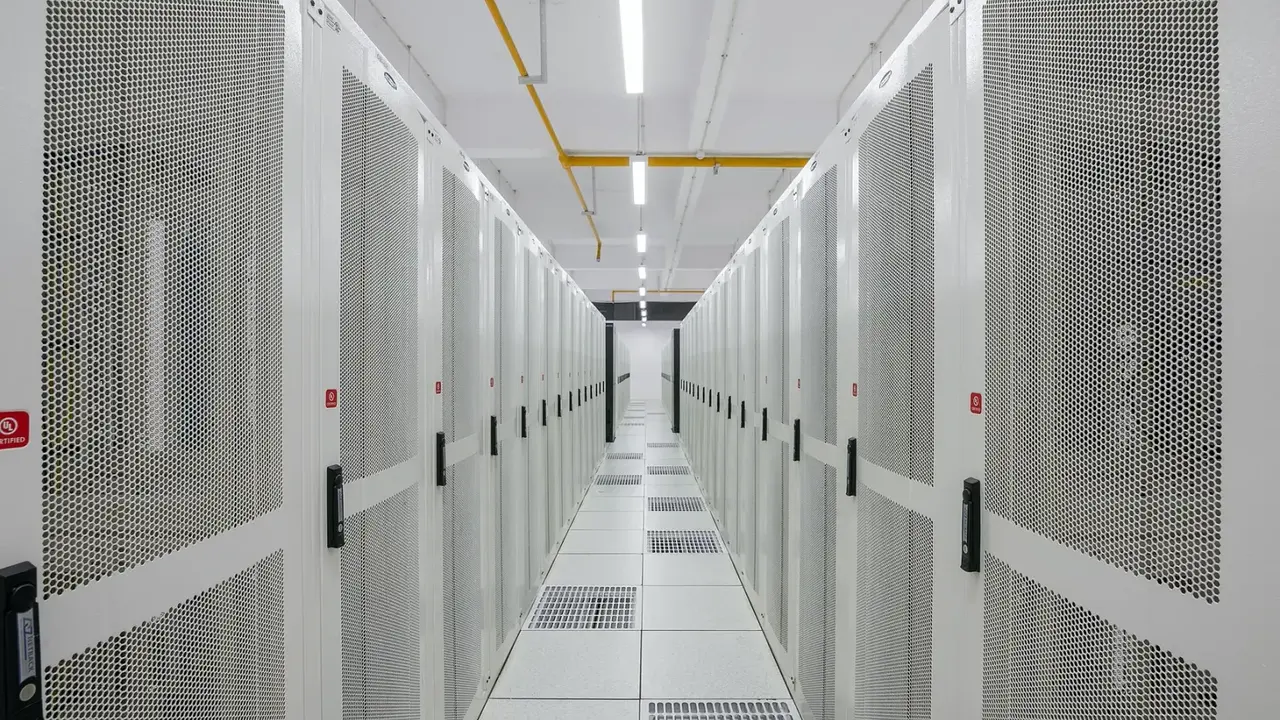
Google’s Minnesota Data Center Plan Would Add More Clean Power
The proposed 780-megawatt facility would be backed by new wind, solar and battery capacity, but experts question whether the approach is best for ratepayers.
Key takeaways
- Google plans to build a 780-megawatt data center in Pine Island, Minnesota.
- The proposed agreement would add 1,400 megawatts of wind, 200 megawatts of solar and 300 megawatts of battery storage.
- Google would pay for at least 75% of its contracted capacity, even if it uses less.
- The deal is pending approval by the Minnesota Public Utilities Commission.
Google’s proposed 780-megawatt data center in Pine Island, Minnesota, would be paired with new power capacity larger than the facility’s expected use. Under a proposed agreement with Xcel Energy, Google would help finance 1,400 megawatts of wind, 200 megawatts of solar and 300 megawatts of battery storage.
How the agreement works
Google says the additions are larger than the data center’s capacity because wind and solar do not generate electricity at all times. Xcel said the power would serve local customers broadly, not only Google, and help advance the area’s carbon-free energy supply.
The agreement includes minimum demand charges and early exit fees. Google would pay for at least 75% of its contracted capacity even if it uses less, and could owe up to eight years of minimum charges if it ends the agreement early.
“Nobody wants to have a big buildout and then have nowhere for that power to go and nobody to pay for that power,” Xcel executive Amanda Rome said, describing the protections.
The deal still needs approval from the Minnesota Public Utilities Commission. Google says the project could support its goal of operating on carbon-free energy around the clock by 2030.
Questions about the grid
Some experts argue data centers could instead be built in smaller facilities where the existing grid has spare capacity. Jigar Shah of consulting firm Multiplier said using existing infrastructure could lower bills for other customers.
David Pomerantz of the Energy and Policy Institute said data centers could provide capital for grid upgrades at lower rates than utilities. He also said utilities may have less incentive to use existing infrastructure when building new assets can generate returns for investors.
Google’s global head of energy and power, Amanda Peterson Corio, said the expansion comes as the U.S. needs investment in aging infrastructure. The North American Electric Reliability Corporation says new data centers will account for “most” of projected electricity demand growth over the next decade.
This article was produced with the help of AI technology. Based on reporting by the outlets listed above.