Intel’s foundry strategy faces pressure as supply limits reshape output
A production shift to meet data-center demand raises questions about Intel’s ability to win customers for its advanced manufacturing business.
Key takeaways
- Intel said quarterly revenue would fall $1 billion to $2 billion short of analysts’ estimates.
- The company is shifting some Oregon capacity from advanced 18A chips to the older Intel 3 process.
- CEO Lip-Bu Tan said Intel plans to announce a couple of customers in the next two quarters.
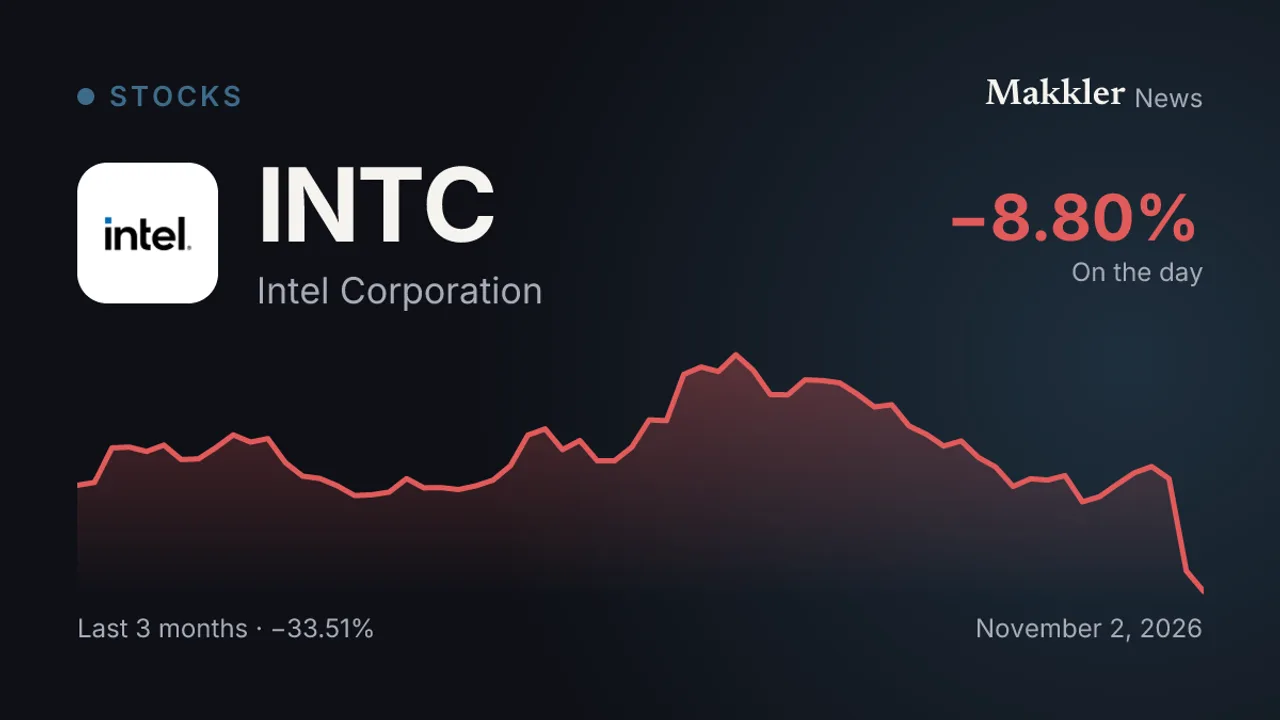
Intel’s effort to build its foundry business faces a fresh test after the company said it would move some Oregon factory capacity away from advanced 18A chips to meet demand for data-center products. The shift comes as Intel said its quarterly revenue would be $1 billion to $2 billion below analysts’ estimates.
Intel shares were down 8.45% at $60.21 as of 20:29 UTC on Monday, after a 45% drop in October, according to figures cited by CNBC. The company said higher costs for memory and other components are weighing on the PC market, which accounts for roughly half of its revenue.
The capacity change means more wafers will be made on Intel 3, an older process used for data-center products. Intel is counting on 18A to attract outside foundry customers, while the company also says industry-wide supply limits are preventing it from making enough chips to meet demand.
David Yoffie, a Harvard Business School professor and former Intel board member, said the move may make prospective customers question whether Intel has capacity beyond its own needs. He said pressure on Intel’s finances could grow if it fails to land a large-scale foundry customer within a year.
CEO Lip-Bu Tan said Intel expects to announce “a couple customers” in the next two quarters. The company’s data-center business grew 78% year over year in the third quarter to $7.3 billion, CNBC reported.
This article was produced with the help of AI technology. Based on reporting by the outlets listed above.