Oracle’s $90 Billion Forecast Tests the AI Cloud Bull Case
A record backlog and customer-funded infrastructure are giving Oracle investors a stronger case, even as debt and cash burn remain risks.
Oracle’s fiscal 2027 revenue target has crossed the $90 billion mark, but the more consequential number may be the $664 billion backlog supporting it.
The database giant added more than $30 billion of AI cloud contracts during its fiscal first quarter, pushing remaining performance obligations above Wall Street estimates. That surge suggests Oracle is no longer merely pitching itself as a credible alternative to Amazon Web Services and Microsoft Azure. Customers are signing commitments at a pace that gives the company unusual visibility into future growth.
Oracle’s first-quarter results supplied evidence that those contracts are beginning to convert into sales. Revenue climbed 30% to $19.3 billion, while cloud revenue rose 62% to $11.6 billion, according to the company’s September 10 earnings release. Adjusted earnings reached $1.92 per share, ahead of analyst expectations, and management lifted its fiscal 2027 adjusted earnings forecast to $8.10 per share.
The $90 billion revenue outlook represents roughly one-third growth from fiscal 2026 revenue of $67.4 billion. That is the bullish argument for ORCL stock: a company historically valued as a mature software provider is now posting growth rates more commonly associated with high-growth infrastructure businesses.
The financing question is harder.
Oracle reported negative free cash flow of about $5 billion in the quarter and capital expenditures of $28.5 billion. Reuters reported that roughly $11.4 billion of that spending was covered by customer prepayments, a detail that eased some concern about the company funding its AI buildout with ever more debt and equity.
Management expects gross capital expenditures of $90 billion to $95 billion in fiscal 2027. The model only works cleanly if Oracle keeps winning contracts, brings data-center capacity online on schedule and turns its backlog into cash without sacrificing margins.
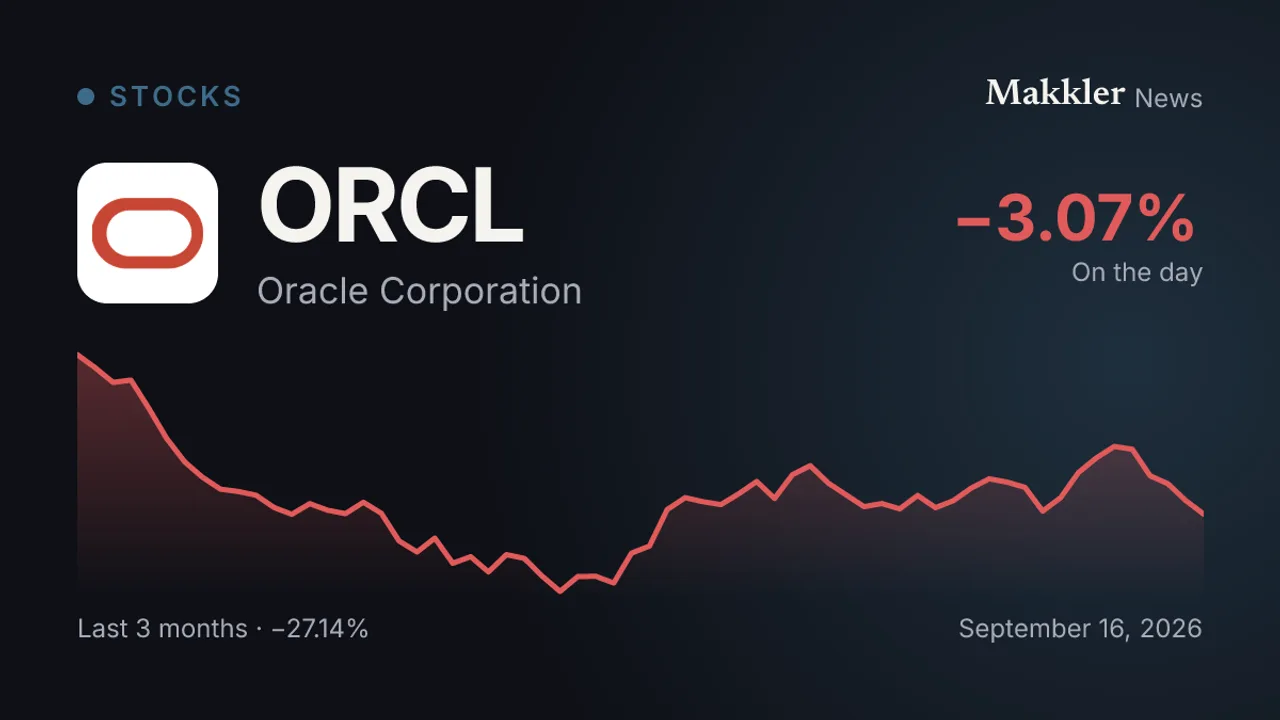
Investors have already punished the stock for that uncertainty. Shares were down more than 21% in 2026 before the earnings rebound, while Oracle trades at a discount to larger cloud rivals on forward earnings, according to Reuters.
That discount is the opportunity. It is not a free pass. Oracle has demonstrated demand; now it must prove that demand can pay for the infrastructure built to serve it.
This article was produced with the help of AI technology. Based on reporting by the outlets listed above.